


Title Facilitating LearningExcerpt: Facilitating learning is a broader topic than teaching. It includes designing effective and efficient programs, selection of appropriate course content and materials, the design of the course, classroom and online dynamics, and the art of content delivery in many different venues and with many different teaching styles. This article is a compilation of many interviews with faculty from many disciplines, providing powerful testimonies and detailed implementation strategies for what has worked well in their classrooms. By studying this article and its linked resources, and by using the associated shared files, you will be able to: • Enable students to participate in selecting and sharing resources for courses that will help them succeed. • Explain strategies that can help students progress through the curriculum efficiently and measure the overall effectiveness of scheduling and advising processes. • Explain the impact of student motivation on learning and success. • Evaluate a wide variety of pedagogical strategies including lecturing, the flipped classroom, student focused teaching, modelling and simulations, game-based learning, collaborative learning, experiential learning, and metacognition. • Design more effective online and blended learning experiences. |
||||
| Author(s): Graham Glynn | Date last modified: June 8, 2019 | |||
| Categories: Chief Academic Affairs Office Staff, Dean’s Office Staff (Deans, Executive Deans, Associate/Assistant Deans, etc.), Department Chair Office Staff (Chairs, Assistant Chairs, Program Directors, etc.), Office Director’s Staff (Director, Assoc./Assist. Director, Coordinator, etc.), President’s Office Staff | ||||
| Tags: Backward Course Design, Collaborative Learning, Competency Based Learning, Course Delivery Modalities, Course Design, Course Learning Outcomes, Course Resources, Experiential Learning, Facilitating Learning, Faculty Teaching, Flipping the Classroom, Game Based Learning, Inquiry Based Learning, Learner Focus, Learner Motivation, Learning Path, Lecturing, Metacognition, Modelling, Prior Learning Assessment, Problem Based Learning, Simulations | ||||
Introduction
Each of these points is examined in this article. An exhaustive treatment of the art of teaching is beyond the scope of this article and has been addressed in many other publications. What is offered are video interviews of faculty who have implemented best or unique practices in their teaching. These videos often include footage of the practice in action within the classroom. They are compiled by major pedagogical approach, Assemble an Appropriate Body of Knowledge and Set of Learning Outcomes
Enable Students to Participate in Course Resource Selection
The Internet provides access to a phenomenal set of resources for learning. There are organizations such as Merlot, that specialize in brokering the exchange of learning resources between faculty. Several top educational institutions, such as MIT, have made their online courses and even videos of lectures publicly accessible. Massive Open Online Courses (MOOCs) have been developed by many institutions, often to showcase their best instructors and courses. Several commercial providers have evolved to support MOOC delivery such as Udacity, edX, and Coursera.
Design an Effective and Efficient Path Through the Learning
Improvements in efficiency can be achieved within a well-planned program in two ways, by awarding credit for prior learning (see Evaluating and Rewarding Student Learning) and by adopting a competency based approach to learning achievement. The competency approach awards credit for achievement of learning outcomes instead of a defined amount of seat time in a classroom, or completion of a defined amount of work in an online course. However, for this to result in increased efficiency, each student must be able to work at his or her own pace and move on to work on new competencies as soon as each is achieved. This flexibility is much easier to implement in online programs where the competency approach has been most broadly adopted e.g. Western Governors University. Providing academic terms that are shorter than the traditional 16 weeks, six and eight-week terms for example, enables an institution to offer more start opportunities for students within a year. Staggering and overlapping their start dates can make it easier for students to quickly sign up for new courses and derive the promised efficiency. Competency based programs are challenging to implement in any cohort-based model in which a group of learners are expected to work together to move through the course or program. Another challenge is that they provide students with non-traditional transcripts which list the competencies achieved instead of courses completed. This can cause challenges with transcript evaluation if the student does not complete the entire credential at the same institution and needs to transfer credits to a non-competency-based program. Within individual courses, one of the most effective design approaches is called backward design – named thus since it is the opposite approach to that traditionally used by most faculty. Once learning outcomes are defined the course evaluation process is then defined. This ensures that evaluations are closely tied to outcomes and drive the content selection rather than the other way around. Finally, the content for the course is selected to match the evaluations. This approach ensures congruence between content, evaluations, and outcomes, and ensures that all content is relevant and may be on the test.
|
||||
 Learning is a very personal process, with each learner having strategies that work best them. The trick is to get the learner to apply these strategies diligently and consistently to an appropriate body of knowledge and experiences. No matter how good the instruction, learning does not occur if the learner does not engage personally with the materials and work at it. We cannot teach to create learning – we must facilitate each learner’s personal journey toward wisdom. The synonyms for facilitate– ease, enable, simplify, smooth, help, aid, assist and expedite, provide some insight into this approach. The job of the institution in facilitating learning is therefore to:
 however, most touch on multiple aspects of teaching so where appropriate, the links jump to the relevant section of the interview. These videos were recorded around 2010. Faculty titles and positions were accurate at that time but may have changed since. These links are indicated with the video camera icon shown to the left.
 Developing an appropriate set of learning outcomes for a course is addressed in
  Each faculty member’s resource selections and approach are biased by personal learning style which may only align with the learning styles of a proportion of students in their courses. Other approaches, and a selection of resources based on different learning styles, would be helpful to these students, but logistically difficult and time consuming to provide. In the following section I provide what is essentially a crowdsourcing solution to this challenge.
 It is challenging for faculty to find course material in the sea of information that is the Internet, let alone customize its selection based in students’ learning styles. However, students will search out this content if their instructor’s approach and resources do not work for them. We can leverage this effort by asking students, preferably in an online course evaluation survey delivered at the end of the course, to list resources other than those provided by the instructor, that helped them succeed in the course. This information could then be made available to subsequent students taking the course. Ideally, the course survey system could even enable the students to rank the usefulness of each resource, much like many commercial sites support ratings, and the system would sort them by the average rating. The most effective resources would therefore bubble up to the top of the list. This would be a great learning tool for students, encourage them to participate in course surveys, and even provide new resources that the faculty could incorporate into the course.
 In
In  Patricia Aceves, the Director of The Faculty Center at Stony Brook, discusses backward course design and the benefits of clearly defining course learning goals and outcomes/objectives. She also addresses how a teaching and learning center can assist faculty with developing pedagogical skills, and skills for the scholarship of teaching and learning (SOTL).
  The Art of Teaching
 This author has worked with hundreds of faculty members to help them improve their pedagogical skills and interviewed many more for
  While lecturing is considered one of the least effective mechanisms for content delivery, it is still one of the most common approaches used in teaching. Studies of attention span indicate that lectures should be kept short and broken up with interactive activities. Technology can be used to make lectures more effective as demonstrated in many of the following interviews.
 Architect at Stony Brook. Nancy discusses active learning, and how professional staff can provide support for making courses more student centric.
  Traditionally, class time has been used for content delivery and students ask questions of each other, and the instructor, outside of this time, usually at the end of class or during office hours. Flipping the classroom reverses this process – content is delivered outside of classroom which then focuses on interactive activities.
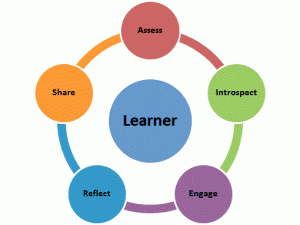 At Stony Brook, the faculty who really focused on student needs and the quality of their learning experience were the most frequent recipients of teaching awards. The cynic may say that popularity with students probably had a big influence on the selection process, but it is more likely that their empathy led to more effective pedagogy.
 Instead of providing students with the information they need for a course, the inquiry-based learning approach provides them with a set of guiding questions that lead them to relevant materials and appropriate conclusions. Problem, or case-based learning as it is often called, provides real world examples of challenges that the students have to analyze, and derive solutions for.
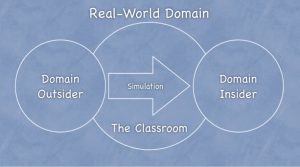 It is not always logistically or financially viable to incorporate real world experiences into a course. Simulation technology and computer models can replicate those experiences in the classroom, and even have some advantages over the real thing, especially in terms of repeatability and safety.
 Games have been used in the classroom for many years. Quiz games, like Jeopardy, are easy to set up and project, and can be played by groups of students competing against each other, engaging the whole class. Many instructional software developers are creating games, hoping to tap into the recreational gaming craze among our students. However, games do not need to be sophisticated or expensive, and faculty can easily develop simple board games based around their subject matter.
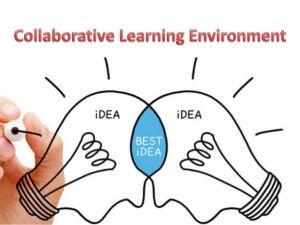 Students group work is a powerful approach to learning and developing essential skills for work life. Group activities can be part of the classroom with simple exercises such as having a group come to consensus on, and report the answer to, a question. They can also work on complex assignments and projects outside of class, and even across multiple courses, as some of the examples below demonstrate.
 Teaching is a very metacognitive process. As instructors we must figure out what we learned and how we learned it, to transmit this to others. In the process, we often experience insights into our own material. By having students engage in a similar activity they to gain insights which result in consolidation of learning. Asking students to explain to themselves (reflection) or others, or by asking how they would apply the lessons learned in an activity to another situation, forces them to generate rules and processes that are independent of specific examples. Knowledge generation requires that learners integrate new information into their personal model of the World. However, it is important that this newly created knowledge be exposed to critique to ensure that it is correct. Reviewed reflection provides an opportunity to have the instructor or peers examine how each student interprets the new knowledge and offer corrections – an important part of the learning process.
 The proportion of student who are required to hold at least a part-time job while in college is quite high. This can make it difficult for them to schedule all the courses they need to progress through the curriculum in a timely way. Similarly, post-traditional learners often have full time jobs and life obligations that make scheduling difficult. Providing online or reduced face time (blended) courses and programs, offers these learners more flexible scheduling and enables them to take courses they might not otherwise be able to. The Online Learning (formerly Sloan-C) Consortium provides great resources and professional development in these areas.
| ↑1 | Graham Glynn Ph.D. reflecting on his initial experience as a faculty member. |
|---|
 Facilitating Learning by Graham Glynn is licensed under a Creative Commons Attribution-NonCommercial 4.0 International License.
Facilitating Learning by Graham Glynn is licensed under a Creative Commons Attribution-NonCommercial 4.0 International License.
Comments on “Facilitating Learning”