How to run a higher education institution as a business while preserving shared governance.
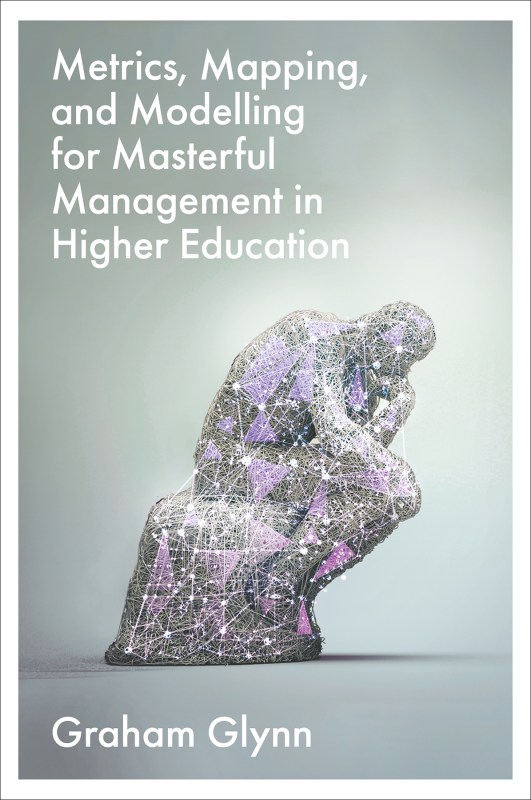
Higher Education Institutions (HEIs) are under pressure from many entities to become more efficient, control tuition and fees, and lower the burden of debt that many students graduate with. The expectation is that HEIs become more “business-like” in their operations. However, they are unique entities because of the level of expertise of their primary employees, the faculty. In addition, with high turnover rates of senior administrators, the faculty is often the stabilizing influence, medium- and long-term memory of the institution. Shared governance is, therefore, a cultural keystone of HEIs and often conflicts with and resists the adoption of more business-like practices. However, the two approaches are not incompatible if a business approach that integrates transparency and stakeholder engagement is adopted. This book is about creating such an environment using concept/mind map-based institutional modelling to empower holistic, transparent, knowledge-informed, and strategic management; integrative-and backward design based-thinking; and inter-institutional resource sharing for improved effectiveness, efficiency, stakeholder engagement and shared governance. It is also an invitation to higher education managers and leaders to participate in the development of this knowledge and in a community for sharing it. The book is, therefore, accompanied by a free Creative Commons licensed system called the Sentient Knowledge Map (SKM) which provides a template model of a HEI and extensive inter-institutionally shared resource libraries. For administrators, the SKM provides the “view from the balcony” that enables them to conceptualize and appraise all the complex, intertwined operations of the institution in one place and easily determine the performance of its individual elements. For faculty and staff, it enables comprehensive understanding of the institution, its resources and metrics. Thus, it empowers their active participation in decision-making processes.

Higher Education Institutions (HEIs) are under pressure from many entities to become more efficient, control tuition and fees, and lower the burden of debt that many students graduate with. The expectation is that HEIs become more “business-like” in their operations. However, they are unique entities because of the level of expertise of their primary employees, the faculty. In addition, with high turnover rates of senior administrators, the faculty is often the stabilizing influence, medium- and long-term memory of the institution. Shared governance is, therefore, a cultural keystone of HEIs and often conflicts with and resists the adoption of more business-like practices. However, the two approaches are not incompatible if a business approach that integrates transparency and stakeholder engagement is adopted. This book is about creating such an environment using concept/mind map-based institutional modelling to empower holistic, transparent, knowledge-informed, and strategic management; integrative-and backward design based-thinking; and inter-institutional resource sharing for improved effectiveness, efficiency, stakeholder engagement and shared governance. It is also an invitation to higher education managers and leaders to participate in the development of this knowledge and in a community for sharing it. The book is, therefore, accompanied by a free Creative Commons licensed system called the Sentient Knowledge Map (SKM) which provides a template model of a HEI and extensive inter-institutionally shared resource libraries. For administrators, the SKM provides the “view from the balcony” that enables them to conceptualize and appraise all the complex, intertwined operations of the institution in one place and easily determine the performance of its individual elements. For faculty and staff, it enables comprehensive understanding of the institution, its resources and metrics. Thus, it empowers their active participation in decision-making processes.